Tuesday, 17 January 2023

The Wintering Place in the Historical Fiction Roundup, New York Times


A Cornucopia of Stories From the Past, Satisfying All Appetites


There’s something for everyone in this season’s bumper crop 

of novels set in other times and places.

 https://www.nytimes.com/2022/12/02/books/review/new-historical-fiction.html

Nice little write up in the NY Times!


Wednesday, 16 November 2022


Released today in the USA and Canada, my followup to Wolves of Eden. The Wintering Place, available in all good and not so good bookshops... (Wait. Is there such a thing as a 'not so good' bookshop?) and wherever you get your books online. Out in Ireland and UK in February 2023.

From: https://www.publishersweekly.com/9781324020486

The Wintering Place

Kevin McCarthy. Norton, $27.95 (308) ISBN 978-1-324-02048-6

McCarthy follows up Wolves of Eden with another tough tale of the Dakota Territory, one as bloody and visceral as a Sam Peckinpah film. It’s 1867 and Irish immigrants Thomas Sugrue and his younger brother, Michael, are mired in a brutal struggle for survival. Both have fled a murder charge in their home country and served with Union forces in the American Civil War. Tom and his lover Sara—who is half French, half Indigenous, and whom Tom recently liberated from abusive captors by more killings—have just rescued Michael from a near-scalping and sure death following a Sioux onslaught at their fort. Over the next few months, a series of events cast the three in sharp relief against a treacherous environment that is as unforgiving as it is lawless: a deadly encounter with a pair of cutthroat fur trappers, a tense dispute with two Crow braves over rights to a pair of elk carcasses, and a final violent reckoning of unresolved grudges from the past at a frontier trading post. McCarthy effectively alternates chapters cobbled from a journal kept by Michael with stark omniscient accounts, thus combining an intimate tone with an unflinching appraisal of the territory’s harsh terms of engagement. This is a solid entry in the revisionist western fiction canon. (Nov.)

Monday, 27 June 2022

 So...it's been awhile but I (and W.W. Norton) have been busy. The follow up to Wolves of Eden will be released in November 2022. It's called The Wintering Place. 


Tuesday, 4 February 2020

Long Time No Post!

So it's been...well, ages since I've posted anything here and, it being February and all, I've decided to be a bit more diligent this year. Yeah, right...  Still, here are a few pictures from events I did last year for Wolves of Eden. Thanks to all those who hosted me to promote the book, especially Professor Suzanne Matson of Boston College's English Department--Go Eagles!--whose creative writing students were an inspiration to meet and work with. Also, thanks to all those at Powell's Books in Portland, Oregon. If you love books, go there. It's several blocks of books, new and used, curated and sold by them that love and know books. It was a dream to read there. Thanks again, all! Peace in 2020!
Poster from Author Event at Boston College
Display at Powell's Bookstore, Portland, OR.

Author Event in Powell's (Possibly the Best Bookstore in the World!)
A Friend--Thanks Yuki!--sent me this photo of Wolves at the News and Books Kiosk in Grand Central Station, NY. What a kick!
Powell's Again, (Pictures courtesy of Geoffrey McCarthy)

Tuesday, 11 December 2018

Irish Times Review

The Irish Times published a review of Wolves of Eden in last Saturday's Weekend edition.

Crime Landscapes of US Frontier, Hypnosis, Big Pharma and Galway

Novels from Kevin McCarthy, Tanya Farrelly, Fiona Gartland, Nessa O’Mahony and Ken Bruen

Sat, Dec 1, 2018, 06:00

Kevin McCarthy’s first two novels, Irregulars and Peeler, were set against the backdrop of the Irish Civil War, but Wolves of Eden (WW Norton, €14.99) opens in the wake of the American civil war, with the psychologically scarred Union Army veteran Lieut Molloy dispatched to Fort Phil Kearny in the Dakota Territory to “put boots on the gallows” – ie, investigate the apparent murder of the fort’s sutler and his wife. Molloy being an alcoholic determined to drink himself to death, the investigation is largely conducted by his second-in-command, Sergeant Kohn; woven through Kohn’s attempts to penetrate the code of omerta that pertains at Fort Kearny is a rambling, semi-literate confession written by Michael O’Driscoll, an Irish immigrant who has served with the Union Army during the recent war.

Wolves of Eden

A compelling tale of men who were “chucked into the roaring flames of history”, Wolves of Eden is superbly detailed in its depiction of frontier soldiering, with Fort Kearny besieged by Chief Red Cloud and the story playing out against the events which led to the Fetterman Massacre of 1866. Flashing with shards of coal-black humour – Michael’s brother Tom, shot in the face at the battle of Chickamauga, has “a face that would make a funeral turn from a main road” – Wolves of Eden is a brutal, blood-soaked and unsentimental account of the Old West that bears comparison with Cormac McCarthy’s Blood Meridian.

Tuesday, 13 November 2018

Wolves of Eden Selected as One of Amazon's 20 Best Books of 2018

Wow...even more delighted to announce that Wolves of Eden has been selected by Amazon as one of its 20 Best Books of 2018 as well as one of its 20 Best Books Literature & Fiction. Happy Days! A real honour to be in the company of such amazing books.

Thursday, 8 November 2018

Wolves of Eden a Book of the Month November 2018 Editor's Pick on Amazon

Delighted to announce that Wolves of Eden has been selected as an Editor's Pick for Book of the Month, November 2018 on Amazon. And a real honour to be on the same list as Michael Connolly and Stephen King. I've been reading King since I could read at all and Michael Connelly's Bosch novels were a real influence on my O'Keefe novels.

Monday, 30 July 2018


Out now in all good...and not so good...bookshops and on Amazon

The Civil War may be over, but in this thrilling historical novel,the battle for the West is only just beginning...


Dakota Territory, 1866. Following the murders of a frontier fort’s politically connected sutler and his wife in their illicit off-post brothel, Lieutenant Martin Molloy and his long-suffering orderly, Corporal Daniel Kohn, are ordered to track down the killers and return with “boots for the gallows” to appease powerful figures back in Washington.  The men journey west to a distant outpost in a valley at once beautiful and savage, where the soldiers inside the fort—from Irish Fenian rebels to anti-immigrant nativists—prove to be violently opposed to their investigations.

Meanwhile, unable to adapt to life as migrant farm laborers in peacetime Ohio, Irish immigrant brothers and Civil War veterans, Michael and Thomas O’Driscoll, reenlist in the army and are shipped west to Fort Phil Kearny in the heart of the Powder River Valley.  Here they are thrown into ferocious combat with Red Cloud’s coalition of Native tribes fighting American expansion into their hunting grounds.  Amidst the daily carnage, Thomas finds a love that will lead to a moment of violence as brutal as any they have witnessed in battle—a moment that will change their lives forever.

Blending intimate historical detail and emotional acuity, Wolves of Eden sets these four men on a deadly collision course in a haunting narrative that explores the injustice of warfare and the resilience of the human spirit.

“Kevin McCarthy is a fresh voice, and a keen one. This Irish thriller writer has ventured boldly into a new continent and a new history. His place is the American West in the 1860s, when the long sad carnage was winding its grim way toward Wounded Knee. With this story of profound tragedy, his new readers will be many.” -- Larry McMurtry, author of The Last Kind Words Saloon

“When it comes to saturation-level historical authenticity—the sense of being there, alive and at large in the vanished past—I think Kevin McCarthy is in the company of masters like Patrick O’Brian and Hilary Mantel. Wolves of Eden is also a shiningly humane novel...about the immigrant soldiers who found themselves on the front lines during the harrowing seizure of the American West.” --Stephen Harrigan, author of The Gates of the Alamo and A Friend of Mr. Lincoln

McCarthy has a fine sense of voice and period detail, but it's the well-drawn characters and riveting scenes that make this novel memorable.--Kirkus Reviews

Set in late 1866 amid Red Cloud’s War in the Dakota Territory, McCarthy’s third novel is a historically rich blend of mystery, morality, and brutal frontier warfare...Though not for the squeamish, this is a riveting and propulsive mystery.--Publisher's Weekly

Wednesday, 17 September 2014

What He Said...Did I Really Say That?

Crime and the City...Solution
A friend brought this to my attention.  It is the transcript of a reading and Q&A I gave for the Dublin City Libraries Crime and the City series of lunchtime talks last year.  It's very wierd, reading a transcription of what you've said.  There is something of the deposition about it.  Something of the courtroom and something of that feeling you get when you hear yourself speaking on tape...

Listen to me.  On tape...  On video or iphone or ice-bucket challenge or whatever.

Despite how strange it is to read my own rather rambling verbiage word for word, I actually managed to say a lot that I really stand by, especially in the Q&A part where I talk about writing and editing and researching historical fiction.  It's here if you're interested.

Here's me on researching historical fiction.  Apparently I have a 'fraudulent gadfly's knowledge' of the Irish revolutionary period.  Hmmm...someone shut that guy up!:  

One of the pleasures of being a historical novelist, one of the pleasures and the banes, I suppose because a lot of the research is really fun to do and it’s really interesting and you wouldn’t write about if you weren’t interested in it in the first place. I’m doing a new novel which is not in this series, although I am going back to this series, I’ve found myself reading the diaries of this Pioneer woman – I’m literally falling asleep reading it and I was thinking why do I have to read this? But you do because the great thing about research is it takes the story in a different direction and quite often you think you have a story set and then you come across like the fact that there were female agents and the story goes in a completely different direction. I love that about research. I tend to research widely first and then go and research for things I need in the story specifically. It’s kind of daunting sometimes. I was on the radio with an historian recently and he had a vast, comprehensive knowledge of the subject and I have kind of a fraudulent gadfly’s, you know a magpie’s knowledge of it because fiction writers research to suit the story as much as anything. I could never write a scholarly treatise on the period. But the research suddenly it will throw something up from the dullest, most banal text and you suddenly think, I have to use that. That’s fascinating. Or what often happens too is your story will be going one direction and something you read will confirm it, you know, I wonder if they would have done that? and then suddenly you’ll just fortuitously stumble upon something – they did do that. Thank God!

http://dublincitypubliclibraries.com/story/kevin-mccarthy-transcript

Tuesday, 19 November 2013

Lisa Reads Books and Interviews Yours Truly

Hi folks. An interview with yours truly over on Lisareadsbooks blog.  It was really fun to do, actually, forcing me to think back on my early reading habits, my working (or lack thereof) habits etc. It's a great blog. Check it out here:  http://lisareadsbooks.blogspot.ie/2013/11/kevin-mccarthy-interview.html

Also, I'll be among some real greats of Irish crime writing this Saturday at the Irish Crime Fiction: A Festival at Trinity College. Really looking forward to it.  Details here: http://irishcrimefiction.blogspot.ie/

Friday, 1 November 2013

Irregulars Shortlisted for Ireland AM Crime Fiction Book of the Year...Author Not-So-Secretly Delighted


Well, folks, I've actually got some real news for once here on the auld blog:  Irregulars has been shortlisted for the Ireland AM Crime Fiction Book of the Year 2013.  I'm really delighted by the news, I have to say, and, if nothing else comes out of it, me and the missus will get to go to the awards banquet and avail of the open bar...  What? No open bar?  Well...

Yours truly and Mariel Deegan,
Sales and Marketing Co-ordinator for New Island Books at the
Bord Gais Energy Irish Book Awards
Shortlist Announcement--Photo courtesy of Ger Holland, a real pro

 Seriously, it's nice to be nominated, really nice, actually, and it will keep Irregulars on the shelves for awhile longer at least.  It's an honour to be on a list with the 5 other writers.  I've only read one novel by one of the other writers, to my shame, The Holy Thief, William Ryan's first novel in his Kolorev series, set in 1930's Russia. It is a great read and no doubt his shortlisted The Twelfth Department is equally good.  So, again, a real honour.

If you want to vote for Irregulars, here's the link below.  Thanks!


http://www.irishbookawards.ie/2013-shortlist-ireland-am-crime-fiction-book-of-the-year/


Following the announcement of the shortlist at the Bord Gais Energy--see that? a plug for my gas company!--Theatre, it was into a taxi and over to the ILAC Centre Library for my reading in the Crime and the City series put on by Dublin Libraries.  It was hectic, running from one place to the other but the turnout was great at the ILAC and the Q&A was one of the most interesting I've done to date, with questions covering everything from civil war history to writing routines and much else as well.  I'd never done a lunchtime gig before and I really enjoyed this one.  Thanks to Padraig, Susan, Mary, Bernadette and all at Dublin City Libraries for their support!
Reading at the ILAC Centre library in Dublin as part of the Crime in the City series.
(My mate Oscar looking suitably bored!)
Nice tie...

Tuesday, 29 October 2013

Talking History

Newstalk 106-108 LogoHey folks, just a few lines here.  I did a short piece on Newstalk Radio's Talking History programme on the 21st of October.  My interview starts at around 27:30 in the link but listen to the whole show if you get a chance.  It's one of the best history shows around.  Many thanks to Patrick Geoghegan and Susan Cahill--producer on Talking History and host of her own show, Talking Books on Newstalk--for having me on.  Here's the link:


Also, will be reading on Thursday, October 31st at 1pm at ILAC Centre Library as part of the Crime and the City series.  There are details in a post below.  Come along if you're in town and fancy something other than the usual hang-sanger and bottle of red lemonade for lunch!

Saturday, 5 October 2013

Gigs and Reels...Some Upcoming Readings

Crime and the City
A quick post here re some readings I'll be doing this and next month. Both of them look really interesting for anyone interested in crime fiction...ie there will be many other writers beside myself reading at them! 
On October 31st I'll be reading at the ILAC Centre library in Dublin as part of the Crime and the City series. Here's the skinny courtesy of Dublin City Libraries:
Crime in Dublin: It's Kind of Love/Hate Relationship
Crime is serious business in Dublin and we love to read about it. From novels about detectives to accounts of serial killers, from gangster biographies to analysis of social issues, we have an appetite for all of it. 'Crime in the City: Crime and History' is a series of talks and readings looking at the broad issue of crime in Dublin through the ages.
This series of events brings together writers from fiction with historians, researchers and bloggers to inform, entertain and promote discussion.
Events take place over the five Thursdays in October at 1pm and will consist of lunchtime readings, talks and discussions.

You can find details here:  http://www.dublincity.ie/RecreationandCulture/libraries/library_events/Pages/autumn_2013_city_crime.aspx


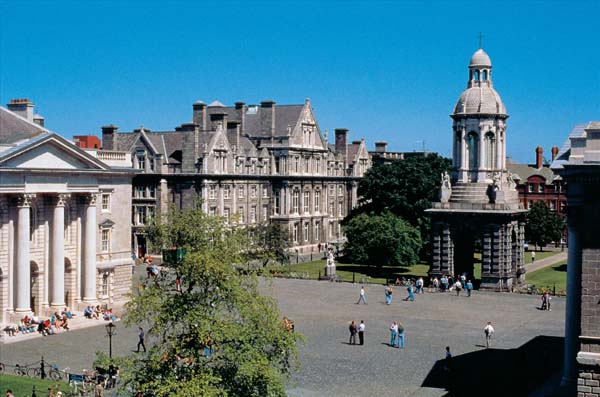
Trinity College Dublin
The second event is the New York University/Trinity College Irish Crime Fiction Festival, held this year at Trinity College Dublin over the weekend of 22/23 November. I'm really looking forward to this one as I'm on a panel with several writers of historical crime fiction whom I really admire. Also, Irish American crime novelist Michael Connolly is launching his latest novel, The Gods of Guilt, on Saturday evening where he will read and be interviewed by Irish crime novelist John Connolly. (A veritable clatch...coven(?) of Connollys!) Michael Connolly's series of Harry Bosch novels is a real favourite of mine and, now that I think of it, were a real influence on my O'Keefe novels. Really looking forward to it.
Michael Connolly's Harry Bosch novels a real influence on my Sean O'Keefe series


Here's the official bumpf:

Irish Crime Fiction: A Festival
Friday 22 November and Saturday 23 November
Trinity College Dublin

Trinity College Dublin and New York University are holding a festival devoted to Irish crime fiction, featuring more than a dozen of the most exciting Irish and Irish-American crime novelists. This will be a memorable weekend, devoted to a key genre of contemporary Irish writing, so please make plans to join us.

We're particularly pleased to announce that our weekend will conclude with a major event: for the Irish launch of his newest novel, The Gods of Guilt (Orion Books, November 2013), Michael Connelly will be interviewed by John Connolly. After the interview, and questions from the audience, Michael will be signing books, which will be for sale on the evening. 

Books by all of the authors will be available for purchase at the festival throughout the weekend.

Tickets for 'An Evening with Michael Connelly' are €6 (inc. fees), and tickets for Friday evening and Saturday daytime events are free. Tickets for all of the festival events are available here. 

Friday 22 November (free tickets)
Long Room Hub, Trinity College

7.00pm-8.30pm: 'A Short Introduction to Crime Fiction: Why We Write It, How We Write It, and Why We Read It', featuring Trinity College alumni. 
Panelists: Jane Casey, John Connolly, Alan Glynn, Declan Hughes, and Eoin McNamee.

Saturday 23 November (free tickets for daytime events)
Long Room Hub, Trinity College

10.00am-11.15am: 'Historical Crime Fiction'. 
Panelists: Kevin McCarthy, Eoin McNamee (chair), Stuart Neville, Peter Quinn, and Michael Russell.

11.30am-12.45am: 'Irish Crime Fiction Abroad'.
Panelists: Declan Burke (chair), Jane Casey, John Connolly, Conor Fitzgerald, Alan Glynn, Arlene Hunt.

12.45pm-1.30pm: lunch

1.30-3.30pm: Surprise Film Screening

3.45pm-5pm: 'Crime Fiction and Contemporary Ireland'.
Panelists: Paul Charles, Declan Hughes, Gene Kerrigan, Brian McGilloway (chair), Niamh O'Connor, Louise Phillips.

Saturday 23 November, Closing Event
6pm (doors open 5.30), Exam Hall, Trinity College (€6 tickets)
'An Evening With Michael Connelly'.

John Connolly will be interviewing Michael, who will be signing books, including his newest novel The Gods of Guilt, which will have its Irish launch at this event.

All the deet's, tickets etc. here:  http://irishcrimefiction.blogspot.ie/


Friday, 20 September 2013

HHhH..ell Yeah!

Makes a great doorstop! Or weapon! Or gift!
Long time no speak, y'all.  Things fairly quiet on the Irregulars front.  No reviews recently to speak of though I've a gig or two coming up in the near future, more on these anon.

Anyway, with summer over and a proper job--thank God--to return to, I've not been doing too much structured writing.  Just a few bits here and there: notes, half-scenes, snatches of dialogue etc.  I have been doing some reading around the subject of my novel in progress, namely  the Indian Wars of the late 19th Century in Wyoming/Montana etc.  (And yes, I'm aware that calling the rampant, blood-soaked expansionism and treaty breaking of the period 'the Indian Wars' might, in some ways, be injudicious, but I use it as short hand.)

Aside from research, I've also just finished a fantastic book on the very nature of historical fiction: the very post-meta-modern-contemporary-historical 'novel' by Laurent Binet, HHhH.  (Talk about short hand!  The 4 h's an acronym for Himmlers hirn heisst Heydrich or 'Himmler's brain is called Heydrich')  Don't let my description put you off.  This book should be required reading for anyone interested in reading or writing historical fiction.
Post-Meta-Mod-Contempo Historical fiction...and quite brilliant as well
 HHhH is an (I assume) autobiographical account of Binet's attempt to write a novel about the assassination of Reinhardt Heydrich, Hitler's very own Butcher of Prague, by Czech partisan operatives sent from London.  The story itself I was familiar with, having read a non-fiction account at my parents' house several summers ago.  The ironic--and pleasantly fortuitous--thing is that I never actually finished the account.  It came time to leave before I got as far as the assassination--baggage weight limits mitigated against my taking a hardback in my luggage--and, though I knew the outcome of the action from other accounts etc., I didn't know what became of the assassins, brave, bold, patriots that they were.  (And I mean that without the slightest tint of irony.  Heydrich was as evil as they come, even by Third Reich standards, and his treatment of the Czechs made him deserving of his fate and then some.)  This made reading Binet's HHhH a particular pleasure because he treats the story--the true story-- of the assassination with the reverence it deserves. And as a story it is beyond parallel in terms of suspense, action, treachery, love.  It's a rare book that can make you think about the process of the story being told while maintaining its grip on the story, and the reader. HHhH is a book you can't put down and yet it makes you stop and contemplate the very nature of its telling.

Laurent Binet, author of the brilliant HHhH--if you're an historical novelist or reader of historical fiction, read it.
In fact, the whole book--while telling the story of the operation, of Heydrich and Czech and Slovak history, among other things--is a reflection on the historical novelist's right to co-opt historical events and real people for the sake of fiction.  This had a particular impact on me as I've wrestled with this myself as a novelist.  Oh, I've wrestled with it...and then simply left the ring and wrote what I wanted.  But like Binet, I was wary of putting words into the mouths of characters from history.  As he says in HHhH:  There is nothing more artificial in a historical narrative than...dialogue--reconstructed from more or less firsthand accounts with the idea of breathing life into the dead pages of history...When a writer tries to bring a conversation back to life in this way, the result is often contrived and the effect the opposite of that desired: you see too clearly the strings controlling the puppets, you hear too distinctly the author's voice in the mouths of these historical figures.

On the other hand, like Binet, I am equally compelled to tell the stories that, for whatever reason, have lodged themselves in my conscious and subconscious mind.  As Binet says:  I don't want to drag this vision around with me all my life without having tried, at least, to give it some substance.  I just hope that, however bright and blinding the veneer of fiction that covers this fabulous story, you will still be able to see through it to the historical reality that lies behind.

What I'm saying, I suppose--and perhaps I'll write more about this in another post--is that the writer must treat the subjects he has chosen, the historical personages--characters if you will--with the respect they are worthy of.  Not the best sentence there, but you get my drift.  Binet has been brutally honest about the doubt and the conviction; the obsession, the honesty and dishonesty that go into a work of historical fiction.  The above quote could, in fact, serve as a manifesto of sorts.

Saturday, 31 August 2013

Two Of The Greats Are Gone

In the past two weeks, two of my favourite writers passed away.  Great artists both, I never met either and yet both had a profound influence on how I write. In fact, both were so good at what they did that they could put the fear of God into lesser writers like myself.  Reading them as a writer could make you stop and shudder in wonder--How does he do that?--and, occasionally, despair--I might as well chuck it in because nothing I write will ever, ever match this...  

Elmore Leonard and Seamus Heaney might not, at first glance, appear to have much in common other than that they were both 'writers'.  One American, the other Irish.  One a novelist, the other a poet etc. etc.  But what they both shared was a love for, and profound trust in, the language of the common man.  Both had a gift for rendering the sound of speech--whether Detroit or Miami, Bellaghy or Belfast-- as it is locally spoken.  And not merely the turns of phrase, the quip or curse or colloquialism, but the rhythms of speech.

Two examples, just chosen randomly:  Heaney, from his poem
The Flight Path: "When, for fuck's sake, are you going to write/Something for us?/If I do write something,/Whatever it is, I'll be writing for/myself."  And here's Leonard from his novel, City Primeval-High Noon in Detroit:  "'Yeah, it's dark in here,' Clement said, looking around Uncle Deano's, at the steer horns on the walls and the mirrors framed with horse collars. 'Darker'n most places that play Country, but it's intimate. You know it? I thought if we was gonna have a intimate talk why not have it in a intimate place?'  Clement straightened, looking up.  'Except for that goddamn pinball machine; sounds like a monkey playing a 'lectric organ.'

One a sharply brilliant political, autobiographical poem and one a fiercely brilliant, mordantly humourous crime novel, but in both you can literally hear the men in them talking. Like they were sitting with you on the train, as in The Flight Path or in Uncle Deano's in City Primeval.  Both writers, both geniuses.  And may they both Rest In Peace.


Tuesday, 23 July 2013

Keeping Up With the Times...The Sunday Times Review

And while I'm at it here at the auld blogging, here's the review of Irregulars published yesterday in the Sunday Times.  So far, the critics have been more than kind.  I was kind of delighted with it.

Sunday Times Culture Section 21.07.13

At A GLANCE
Irregulars by KEVIN McCARTHY
New Island £13.99 pp383

It’s Dublin, 1922, and demobilised Royal Irish Constabulary man Seán O’Keeffe is at a loose, fragile and unemployable end. He drinks too much, he’s lonely for any kind of companionship, he is spooked by memories of combat in Gallipoli and in Ireland’s ‘’Tan War’’, he is mourning the death-in-action of his younger brother, and he is guilt-ridden at not seeing his parents for months even though he lives less than a mile from the family home. A chance meeting with a doctor alerts O’Keeffe to the fact that his father – also a former policeman – is ill. Three days later, after a skinful of booze and with the vague recollection if ‘’a heady miasma of perfume and sweat....the laughter of women and a crackling gramophone’’, O’Keeffe finally returns home.
His father, now drifting in and out of early-onset Alzheimer’s, burdens O’Keeffe witha moral debt that must be repaid to Ginny Dolan, a powerful brothel keeper in the city’s infamous Monto area. For some unknown reason, Dolan had O’Keeffe’s father in her pocket, and it is now the turn of his son to take that place. Ginny Dolan’s request? O’Keeffe must find her beloved teenage son, Nicholas, who has taken up with republican guerrillas (aka the ‘’irregulars’’).
With a nod to fellow Irish-American writer Dennis Lehane, Kevin McCarthy – whose 2010 debut crime Novel, Peeler, also featured the character of O’Keeffe – blends a rigorously researched, factually based storyline with an array of crime-novel characters, only a few of which come across as hackneyed.
O’Keeffe stalks his prey through the main thoroughfares and back streets of Dublin, via detention camps in Gormanstown. Dolan is embittered and quick-witted: ‘’Only in Ireland can men let politics come between them and a screw,’’ she notes.
It doesn’t matter if you don’t have a strong interest in Irish history – McCarthy writes such an involving, oft-times harsh story that lack of knowledge neither intrudes nor undermines they enjoyment. The contextual mood seems realistic for the times that are portrayed. Depression and disappointment, poverty, prostitution and child abuse are all here. No pretty pictures are painted and Irregulars is all the better for it

Tony Clayton-Lea

Monday, 15 July 2013

Up the Dubs! A review of Irregulars on the RTE Ten Website

Spotted a great review of Irregulars on the RTE Ten website today. http://www.rte.ie/ten/news/2013/0715/462563-irregulars-rte-ten-review/  It's short enough so I'll post it here.  I have to say I'm delighted.  Irregulars is my own twisted love letter to Dublin and the reviewer really felt the love.
Dublin Coddle...not on tourist menus for a reason.
Looks awful, tastes great!

I love the title (sub heading?) too. New Jackeen City...classic!  (Jackeen, for those who might not know, is slang for a denizen of Dublin.  According to the eminent Dr. Charles Wikipedia its origins are thus:  Jackeen is a mildly pejorative term for someone from Dublin, Ireland. The Oxford English Dictionary defines it as "A contemptuous designation for a self-assertive worthless fellow," citing the earliest documented use from the year 1840.[1]
  
Ice T, Wesley Snipes, a young Chris Rock? A movie charting the rise and fall of
a Dublin drug lord.  Or maybe not...

The review, by Henry Guerin, is printed below.

    New Jackeen City
 
Kevin McCarthy's Dublin-set thriller Irregulars has just been published by New Island. Harry Guerin says this case is really worth investigating.

It takes some kind of author to make you see your native city in a new way, but after reading Kevin McCarthy'sIrregulars the streets, alleys and ghosts of Dublin Past will never seem the same again. Long before you finish devouring the chapters you'll be planning a walking tour of your own.
Set in 1922, Irregulars tells the story of Seán O'Keefe – ex-soldier, ex-Peeler – who's thrown head-first into a pitch black coddle of missing children, murder, stolen money, Civil War politics and a family debt that must be honoured, with plenty of beatings and bodies before he can.

As O'Keefe goes from front parlours to tenements to lodging houses, he's joined by 'Just' Albert; Monto muscle with a personal interest in the case and an unshakeable belief that he can fix any problem with his hands. After he and O'Keefe pay a visit to the internment camp at Gormanston you're ready to believe him, and that's just one of a number of brilliantly realised set pieces amidst the twists.
Like George P Pelecanos with his DC Quartet, McCarthy has made Dublin his own, populating it with heroes, shooters, spies and street urchins who look good for two decades and a dozen books, all far from The Gathering crowd.  4.5/5 stars.